Trump Rushed Back To DC Emergency Iran Decision Coming See More
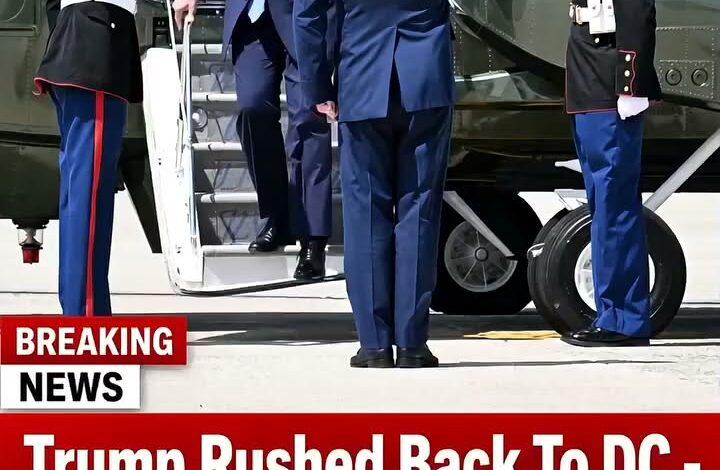
A sudden return to Washington during an international crisis can signal that senior officials need to meet, but it does not reveal what decision has been made. The president may return for a national security briefing, consultations with military and diplomatic advisers, calls with allies, or a scheduled event that changed as conditions developed.
The social media caption links Donald Trump’s travel to an “emergency Iran decision” without providing a date, official statement, or description of the decision. That connection may be accurate, partly accurate, or simply an interpretation added to dramatic footage. The schedule and the full remarks are needed before a firm conclusion can be drawn.
Decisions involving Iran can cover a broad range of issues. They may concern diplomacy, sanctions, military force protection, nuclear negotiations, regional attacks, shipping security, or support for allies. Treating every development as an imminent strike ignores the many nonmilitary options available to a president.
Major national security choices usually involve a structured process. The president receives intelligence assessments and legal advice, hears options from the secretaries of state and defense and senior military leaders, and may consult congressional leaders or foreign partners. Plans can change as new information arrives.
Travel footage is easy to misread. A clip of Air Force One, Marine One, or a motorcade may come from another trip. Posts can remove the original date and add urgent text. Official travel pools, flight arrival reports, and the White House schedule help confirm whether the movement occurred when claimed.
The phrase “decision coming” is also a prediction rather than a description of an action already taken. Officials sometimes use deliberate ambiguity during negotiations or military planning. Analysts may reasonably discuss possible outcomes, but their expectations should be labeled as analysis.
Iran-related news can affect people far beyond Washington. Military personnel, diplomats, commercial shipping, regional civilians, and energy markets may all face consequences. That is why inaccurate reports can be particularly harmful. A rumor of immediate action may trigger fear or economic reaction before any policy is announced.
Reliable coverage should say who reported the president’s return, why the schedule changed, which officials were meeting, and whether the administration issued a formal notice. It should distinguish defensive precautions from offensive operations and separate a policy review from a final order.
Readers can resist the pressure of an unfinished caption by waiting for a complete briefing or a written statement. If several established outlets independently confirm the same details and link them to named officials, the picture becomes clearer. Until then, the reel documents a claim about urgency rather than proof of a specific decision.
Presidential movement can be newsworthy, especially during tension with Iran. Its meaning comes from verified timing, official actions, and the policy announced afterward. The most responsible account leaves room for uncertainty while those facts are established.
Any later announcement should be compared with the claim in the reel. If the administration chooses diplomacy, new sanctions, defensive deployments, or another course, that outcome may show what the hurried return was about. It may also show that the caption overstated the connection. Updating the story after the decision is essential because viral posts often freeze the uncertainty of the first moment. A complete record follows the event from the initial alert through the documented action and its consequences, giving readers more than the suspense of a promised revelation.