Mexican president states that Trump is not See more
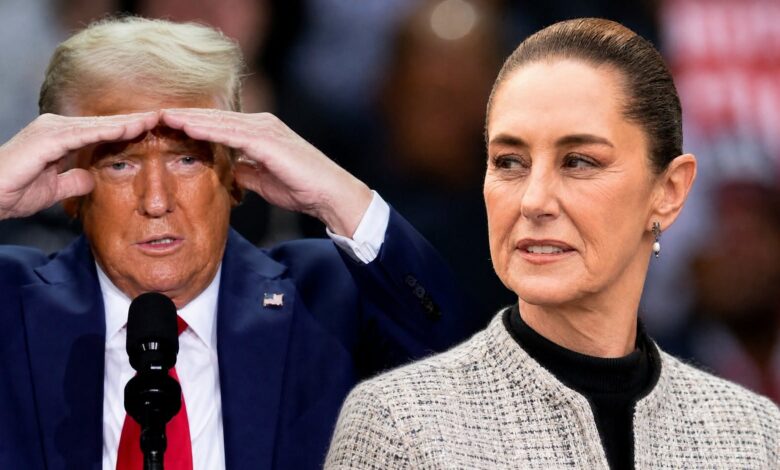
The world stopped breathing. In a few explosive sentences, Donald Trump claimed the United States had bombed three nuclear sites inside Iran — including the deeply buried Fordo facility. Within hours, Tehran vowed it “reserves all options.” Allies whispered of red lines. Enemies spoke of revenge. Diplomats warned of consequences that could rewr… Continues…
Shock rippled through foreign capitals as Trump framed the strikes as a “very successful attack” and “an historic moment” for the U.S., Israel, and the world. Supporters hailed a decisive blow against Iran’s nuclear ambitions; critics warned it could ignite the very regional war Washington claimed to be preventing. In Europe, leaders urged restraint and emergency consultations at the United Nations, fearing a collapse of already fragile diplomacy.
In Tehran, Foreign Minister Abbas Araghchi condemned the strikes as “outrageous” and “criminal,” invoking the UN Charter and insisting Iran would defend its sovereignty, interests, and people. His warning that the attack would have “everlasting consequences” fueled anxiety about cyber retaliation, missile launches, or proxy escalations across the Middle East. Between triumphalism in Washington and fury in Iran, the world now watches a narrow, dangerous space where miscalculation could turn a single night’s operation into a generational war.
The danger after a military strike is not confined to the damage already done. It also lies in how each government interprets what comes next. A movement intended as a warning may be read as preparation for another attack. A statement aimed at a domestic audience may be understood abroad as a commitment to escalate. In such conditions, ambiguity can become a risk of its own.
Diplomacy has to operate inside that uncertainty. Officials need channels through which they can communicate limits, intentions, and possible ways to prevent further confrontation. Those exchanges may be politically uncomfortable, especially when public language has become uncompromising. Yet the absence of communication can leave each side relying on assumptions about the other’s next move.
The competing descriptions of the operation reveal how far apart the governments remain. One side presents the use of force as a successful intervention; the other describes a violation that demands a response. Those positions do not automatically tell observers what action will follow. They do show why a shared account of events is so difficult to establish.
For neighboring countries, the concern is whether the confrontation stays contained. A regional crisis can draw in actors with different priorities and different ideas about acceptable risk. Each additional participant makes the consequences harder to predict. Restraint therefore involves more than a single decision by a single government; it depends on a series of choices across an already tense environment.
The people living under that uncertainty have little influence over the language issued in their names. They are left to interpret announcements, worry about loved ones, and wait for signs that the situation is stabilizing. The distance between a confident official statement and an anxious household can be enormous.
What matters in the days that follow is whether actions leave room for a political outcome. Claims of success and promises of retaliation may dominate the immediate response, but preventing a broader conflict requires something more difficult: decisions that reduce the chance of another irreversible step.