Trump Delivers a Direct Warning to the Media During a Live Broadcast
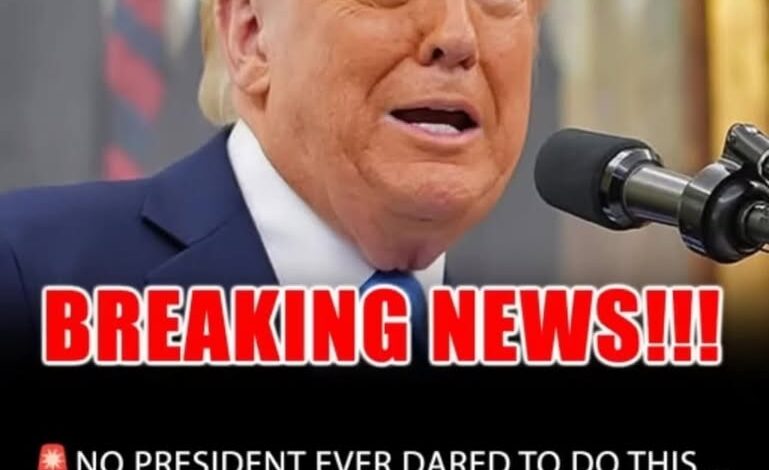
The atmosphere in the briefing room was thick with anticipation as the cameras began to roll, but nobody could have predicted the unprecedented spectacle that was about to unfold before the eyes of the nation. For months, political analysts and commentators had speculated about the direction of the current administration, yet the moment Donald Trump stepped up to the podium, he entirely bypassed the usual political theater.
There was no mention of the economy, no detailed breakdown of complex foreign policy decisions, and no traditional opening statement about the state of the union. Instead, the focus shifted sharply, locking onto a target that has been at the center of the political storm for years.
A Direct Warning To The Media
His voice did not shake. It hardened, cutting through the murmurs of the gathered journalists with undeniable authority. In the glare of the bright studio lights, Trump delivered a direct, unfiltered warning to the media that sent shockwaves through the broadcasting networks.
It was a moment that transcended the standard political rhetoric, leaving television anchors and reporters grasping for words as the reality of the statement began to sink in.
With a firm gaze directed squarely at the lens, he stated clearly that changes are coming. For those watching at home, the tone was unmistakable. It sounded less like a routine policy announcement and more like a declaration of war against the established press corps.
The reaction in the room was immediate. The collective intake of breath from the assembled press was almost audible, followed by a heavy silence that hung over the briefing room for several seconds. For decades, the relationship between the presidency and the media has been defined by a tense but established protocol of give and take.
Even during the most contentious administrations, there remained a foundational understanding of the role the press plays in a democratic society. However, this moment appeared to shatter that implicit agreement. The sharp contrast between this address and previous presidential briefings underscored a new, more aggressive stance that has left political observers deeply divided about the future of the free press.
The contrast between a conventional briefing and a message directed at the press gives the scene its central tension. Viewers expecting an outline of policy instead encountered a confrontation about the relationship between political power and the people reporting on it. In the account, that change of focus matters as much as the forceful delivery. It moves the subject away from a particular policy question and toward the conditions under which public questions are asked.
A televised appearance also creates more than one audience. Journalists are present in the room, while viewers encounter the same exchange through a camera, a broadcast, or a later excerpt. Tone and presentation can shape those experiences differently. The description emphasizes that visual setting and the reaction of the room, presenting the warning as a performance of authority as well as a spoken statement.
The broader issue raised is how disagreement between an administration and the press is expressed. Sharp criticism is one part of public debate, but the account describes a moment interpreted as a more substantial change in attitude. That interpretation explains the attention given to the exchange. Its significance lies in the questions it raises about scrutiny, political communication, and the expectations surrounding a public briefing.