Fictional Investigation Into a Wildlife Incident in a Remote Woodland Area
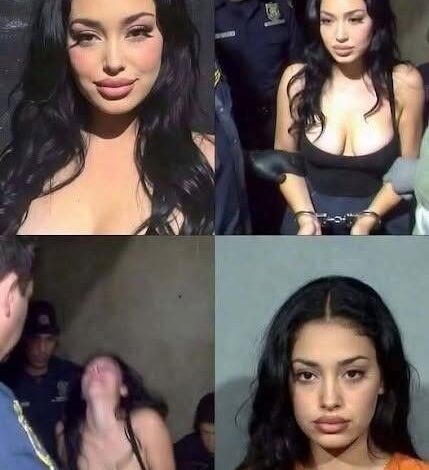
The source labels this story as fiction created for entertainment.
A witness report in a quiet woodland area led to a police response, raising questions about wildlife protection, public safety, and what investigators still need to establish.
A peaceful stretch of woodland is usually associated with birdsong, hiking trails, fresh air, and the quiet beauty of nature. It is not a place where visitors expect to encounter a disturbing situation that prompts them to contact law enforcement. Yet, according to the account accompanying the supplied image, that is what reportedly happened when several people visiting a remote wooded area noticed activity they considered suspicious.
Their report brought officers to the location and turned an otherwise quiet outdoor setting into the focus of an investigation involving a young woman and a deceased wild animal. The unusual circumstances quickly raised questions: What had the witnesses actually seen? How had the animal died? Was any wildlife regulation involved? And what could authorities establish from the evidence available at the scene?
The image shows a woman in the presence of uniformed officers, but an image alone cannot establish what happened, whether a person has been charged, or whether any allegation has been proven. The supplied account also does not provide a confirmed location, the animal’s species, the woman’s identity, or a final investigative outcome. Those gaps matter. A responsible report must distinguish the initial account from facts that authorities have actually confirmed.
What makes this incident important to examine is not an invitation to speculate about the woman or sensationalize the circumstances. It is the broader issue raised by the report: when unusual activity involving wildlife is noticed in a remote natural area, how should witnesses respond, what questions might investigators need to answer, and why must the evidence be examined carefully before conclusions are drawn?
The answers begin with the first report—and with the difference between what someone believes they witnessed and what an investigation can prove.
Investigation Raises Questions After Disturbing Wildlife-Related Incident in Remote Woodland Area
A witness report in a quiet woodland area prompted a police response, raising questions about wildlife protection, public responsibility, and the importance of establishing the facts.
A quiet woodland is usually the kind of place people visit to escape the noise of everyday life. Hikers follow narrow trails beneath the trees, visitors pause to watch birds, and the sounds of traffic gradually give way to wind moving through the branches. It is difficult to imagine such a peaceful setting becoming the center of a disturbing investigation. Yet, according to the story accompanying the supplied image, that is what reportedly happened when visitors noticed unusual activity involving a young woman and a deceased wild animal.
The witnesses were concerned enough to contact authorities. Officers subsequently arrived at the remote location to assess the situation, while questions began to emerge about what had happened, why the animal was there, and whether any wildlife or public-conduct regulations might apply. An image associated with the story shows a young woman in the presence of uniformed officers, but a photograph cannot establish the full circumstances or prove that anyone committed an offense.
There is another important detail readers should know before interpreting the story: the original page carries a disclaimer stating that it is a fictional work created for entertainment. It does not provide independently verified details about a real-world case, a confirmed location, the animal’s species, the woman’s identity, formal charges, or a final legal outcome. The discussion below therefore treats the incident as a fictional scenario and explores the issues raised by its premise rather than presenting the allegations as established news.
That distinction does not make the subject unimportant. The scenario raises genuine questions about how people should behave around wildlife, why witnesses sometimes need to report unusual activity, how officers and wildlife specialists may examine a scene, and why public discussion should not turn suspicion into a verdict.
The most revealing part of a case like this is not necessarily the first moment that attracts attention. It is what happens afterward: the effort to understand what witnesses actually observed, the careful examination of the animal and its surroundings, and the responsibility to protect both wildlife and the rights of the people involved. Those questions deserve a closer look.
Chapter 1: A Quiet Woodland Becomes the Focus of an Investigation
The fictional account begins with an ordinary outdoor setting. Several people were visiting a remote wooded area when they noticed activity that appeared unusual to them. The source does not describe every movement they observed or provide a detailed timeline, but it says their concern led them to contact authorities rather than simply ignore the situation.
That decision forms the turning point of the story. Before the report, the woodland was simply a place where people could spend time outdoors. After the call, it became a location that officers needed to assess.
Remote natural areas can be difficult places to understand at first glance. Trees, uneven ground, changing light, and distance can limit what a person can see. A witness may notice something that seems concerning without knowing what happened before arriving or what circumstances may explain the scene. Even people who are familiar with a particular trail may not know every activity taking place beyond the path.
This is one reason why a witness report should be treated as the beginning of an inquiry rather than its conclusion. The people who contact authorities can provide important observations, but they are not responsible for deciding whether a law has been broken. Their role is to describe what they noticed as accurately as possible and allow trained personnel to assess the situation.
In the account, officers arrived to investigate a situation involving a young woman and a deceased wild animal. That combination naturally raises questions. Was the animal already dead when the witnesses noticed the activity? Did anyone move or handle it? Was the animal protected under local regulations? Did the location have special rules governing human activity? And was the behavior reported by witnesses accurately understood?
The original story does not answer those questions. It describes a developing investigation and emphasizes that evidence and legal procedures should determine the outcome.
That absence of detail is significant. A reader may be tempted to fill the gaps with assumptions, especially when a headline uses words such as “disturbing” or “suspicious.” But those words describe how a situation was perceived; they do not independently establish what happened.
A careful investigation would begin by separating what is known from what remains uncertain. The presence of a deceased animal is one issue. The conduct witnessed by visitors is another. The identity and actions of the people present are separate questions. Each needs to be examined rather than combined into one dramatic conclusion.
The image also needs to be understood in that context. It appears to show a woman being accompanied or supervised by uniformed personnel. It does not reveal what happened before the photograph was taken, what questions officers asked, whether the woman was formally detained, or what legal status she may have had. A photograph can illustrate a story, but it cannot replace evidence.
The woodland setting adds another layer. Natural areas are shared spaces. People visit them for recreation, research, hunting where permitted, conservation work, and many other lawful reasons. The presence of a person in a remote location is not automatically suspicious. What matters is the actual conduct, the surrounding circumstances, and the rules that apply.
For that reason, the first stage of the fictional investigation is not about rushing toward a judgment. It is about establishing a reliable account of the scene. The witnesses have raised a concern. Officers have responded. The next task is to understand what the available information can genuinely show.
And that leads to the next question: how much can witnesses contribute when an incident occurs far from public view?
Chapter 2: Why Witness Reports Can Become the Starting Point
Witnesses often play an important role in bringing unusual situations to the attention of authorities. Many investigations begin because someone notices something that appears unsafe, unlawful, or out of place and decides to report it.
In a woodland environment, that decision may be particularly important. Remote areas can have fewer people nearby, limited communication coverage, and long distances between trails and public roads. If an incident involves a possible injury, an animal in distress, or a potentially unlawful activity, a timely report can help trained personnel respond.
The fictional account says several visitors noticed activity they considered suspicious and contacted authorities. It does not identify them, reproduce their statements, or explain precisely what each person observed. That means it would be inappropriate to invent dialogue or claim that they saw a specific act. The meaningful point is that their report prompted an official response.
A witness statement is most useful when it focuses on direct observations. What did the person see? Where were they standing? How far away was the activity? How long did they observe it? What could they see clearly, and what was obscured by trees, darkness, weather, or distance?
These questions can help investigators understand the limits of an observation. A person may be certain that something unusual happened while remaining uncertain about the details. That is not necessarily a failure of memory or honesty. It is a normal limitation of human observation.
For example, someone walking along a trail may notice a person near an animal but may not know whether the animal was injured, already deceased, or being examined for another reason. A witness may see a brief interaction without knowing what happened earlier. Another visitor may observe a different part of the scene. Each account can contribute something, but the accounts need to be assessed together.
Investigators may also need to distinguish between what a witness personally observed and what they heard from someone else. Direct observations and second-hand information are not interchangeable. If one visitor tells another what they believe happened, the second visitor should not later be treated as an independent eyewitness to the original event.
This distinction becomes especially important when a story attracts public attention. A brief report can be repeated many times online, with each retelling adding details that were not present in the original account. A description may gradually become more dramatic even though no new evidence has emerged.
Responsible reporting avoids that trap. It does not turn an uncertain observation into a confirmed allegation. It does not assume that the most shocking interpretation must be correct. It makes clear what witnesses reported and what authorities have independently established.
Witnesses also have a responsibility to protect their own safety. If they encounter a concerning situation in a remote area, approaching the people involved may create unnecessary risk. They should avoid disturbing wildlife, touching possible evidence, or attempting to conduct their own investigation. Where appropriate, they can move to a safe location and contact the relevant authorities.
The role of witnesses is therefore important but limited. They can alert authorities, provide observations, and help establish a timeline. They do not determine guilt, identify the applicable law, or decide what consequences should follow.
That work belongs to investigators, specialists, and the legal system. In the woodland scenario, the report is the beginning of the process—not proof of the final explanation.
Chapter 3: Why a Deceased Wild Animal Requires Careful Examination
The presence of a deceased wild animal can raise several questions that cannot always be answered by looking at the scene. An animal may die from natural causes, illness, injury, an accident, predation, or human activity. Without reliable evidence, it may be impossible to determine which explanation is correct.
That is why the animal itself may become an important part of an investigation. Authorities may need to establish the species, its condition, where it was found, and whether there are signs that help explain how it died. Depending on the circumstances and local procedures, wildlife specialists may be asked to assist.
The fictional account does not identify the animal involved or state how it died. It also does not describe an examination or report any confirmed findings. Those details should not be invented. The scenario simply raises the possibility that wildlife regulations and animal protection issues may be relevant.
The species can matter because wildlife laws are not always the same for every animal. Some species receive special protection because their populations are vulnerable, their habitats are limited, or they play an important role in an ecosystem. Other species may be subject to hunting seasons, licensing requirements, or rules governing how remains can be handled.
Even where an animal is not classified as endangered, regulations may still govern hunting, possession, transportation, or disposal. The relevant rules depend on the jurisdiction and the circumstances. A person cannot safely assume that every wild animal can be handled freely simply because it has already died.
The condition of the animal may also be relevant. A specialist may be able to identify injuries, signs of illness, or other physical characteristics that help explain what happened. In some circumstances, a more detailed examination may be necessary. However, it would be misleading to suggest that a particular examination took place in this fictional scenario when the supplied account does not say so.
The location where an animal is found can also provide context. Was it on a public trail, in a protected habitat, near a road, or far from an established path? Was it exposed to weather or other environmental conditions? Had the area been disturbed? These details may help specialists interpret what they observe.
For members of the public, the safest approach is generally to avoid touching or moving a deceased wild animal unless an authorized professional instructs them to do so. Even an animal that appears lifeless may present risks. Wildlife can carry parasites or pathogens, and physical contact can expose people to injury or contamination. Moving the animal may also interfere with an assessment if authorities need to examine its original position.
A person who encounters a dead animal in an unusual location can note the general location and contact the appropriate local agency if the circumstances appear concerning. They should not attempt to collect body parts, transport the animal, or disturb the surrounding area.
The central issue is not simply that an animal has died. It is whether the circumstances surrounding its death or handling raise a legitimate concern under the relevant rules. That question requires evidence, not assumptions.
Chapter 4: Wildlife Regulations Are More Complex Than Many People Realize
Wildlife protection laws exist for several reasons. They help conserve animal populations, protect habitats, regulate hunting, prevent illegal trade, and reduce harmful interactions between people and wild animals.
A forest is not just a collection of trees. It is a living environment in which plants, insects, birds, mammals, fungi, and microorganisms interact. Changes affecting one species can sometimes influence other parts of the ecosystem. Regulations are designed, in part, to reduce activities that could damage these relationships.
The fictional story refers broadly to wildlife regulations, animal protection, public conduct, and environmental protections. It does not identify a particular state or country beyond describing the setting as being in the United States. Because wildlife rules vary across jurisdictions, it would not be accurate to name a specific statute or claim that a particular law was violated.
In general, rules governing wildlife may cover several different activities.
Hunting and taking wildlife: Many jurisdictions regulate which animals may be hunted, when hunting is allowed, which methods can be used, and what permits are required. These rules can vary by species, season, location, and the status of the land.
Handling protected species: Some animals receive special legal protection. Restrictions may apply to capturing, possessing, disturbing, transporting, or trading them. The exact restrictions depend on the species and the applicable law.
Disturbing habitats: Certain natural areas have additional protections. Activities that damage vegetation, disturb nesting sites, or interfere with sensitive habitats may be restricted even when no animal is directly harmed.
Possession and transportation of animal remains: In some places, regulations govern the possession or movement of remains from wild animals. This can help prevent illegal hunting or trade and may assist authorities in monitoring wildlife populations.
Public conduct and safety: Parks and protected areas may have rules intended to keep visitors safe and prevent behavior that disrupts other people or damages the environment. These rules are separate from species-specific wildlife protections.
The existence of these regulations does not mean that every unusual encounter is a criminal offense. Investigators must first determine what happened and then identify which rules, if any, apply. A person may have a lawful reason to be near an animal, such as reporting an injury, conducting authorized research, or assisting with a permitted wildlife activity.
This is why context matters. The same physical location could be used by hikers, researchers, wildlife officers, land managers, and licensed hunters. Their activities may be governed by different rules. The fact that an event occurs in a remote woodland area does not automatically make it unlawful.
It is also possible for more than one agency to have responsibility. Local law enforcement may respond to a public safety concern, while wildlife officers or environmental authorities may be better equipped to assess the animal and determine whether specialized regulations apply.
The fictional account mentions the possibility of cooperation between agencies. That is a reasonable general feature of wildlife-related investigations, but the source does not confirm which departments, if any, were involved in the scenario.
Ultimately, wildlife regulations are most effective when people understand that natural areas are shared spaces governed by rules intended to protect animals, habitats, and visitors. Respecting those rules is not simply a legal obligation. It is part of responsible outdoor behavior.
Chapter 5: What Investigators May Need to Establish
When authorities arrive at an unusual scene, their first responsibility is to understand the situation and determine whether anyone needs immediate assistance. After that, they may need to establish what happened, who was present, and whether there is evidence of a legal violation.
The exact procedure depends on the circumstances. The original story does not provide an official investigative report, so the following describes general questions that may arise in a fictional wildlife-related inquiry rather than confirmed steps taken in this particular scenario.
Establishing the basic timeline
A timeline can help investigators understand how an incident developed. They may need to determine when witnesses arrived, when they noticed the activity, when they contacted authorities, and when officers reached the location.
If different people observed different parts of an event, their accounts may help clarify the sequence. Investigators would need to consider whether the accounts are consistent and whether there are gaps that require further examination.
A timeline should not be constructed from guesses. If a witness cannot remember an exact time, that uncertainty should be recorded rather than replaced with an invented figure.
Understanding the location
The physical setting may provide important context. Investigators may need to establish whether the area is public or private land, whether it lies within a protected natural area, and whether special access or wildlife rules apply.
The location may also affect how officers approach the scene. Remote terrain can make it harder to reach a site, communicate with other personnel, or preserve relevant information.
Identifying the animal
If the animal’s species is unknown, a wildlife specialist may be needed. Identification can be important because different species may be covered by different protections or management rules.
The animal’s condition may also need to be assessed. A specialist may be able to determine whether there are visible signs of injury or other information relevant to the circumstances.
Reviewing witness accounts
Investigators may speak with people who reported the incident and compare their observations. They may ask what each person saw directly, how far away they were, how long they observed the situation, and whether anything obstructed their view.
A witness account is not automatically proof of wrongdoing. It is one source of information that must be assessed alongside other evidence.
Considering physical evidence
Depending on the situation, investigators may document the location and any relevant objects or disturbances. Photographs, notes, and other records may help preserve information about the scene.
The precise methods used vary according to the case. It would be inaccurate to claim that a forensic examination, laboratory test, or particular evidence collection method occurred in the fictional incident unless the source confirms it.
Determining which rules apply
Once the circumstances are clearer, authorities may need to consult relevant wildlife and environmental regulations. They may also need to consider whether public-conduct or property rules are relevant.
A legal conclusion should come after the facts and applicable rules have been assessed. It should not be assumed from the appearance of a photograph or the emotional reaction of people who hear about the incident.
These questions illustrate why an unusual wildlife-related situation may require careful examination. A quick judgment may overlook important context, while a methodical process gives investigators a better chance of reaching a reliable conclusion.
Chapter 6: Why Remote Woodland Investigations Can Be Difficult
A remote woodland area can look simple from a distance, but investigating an incident there may be more complicated than responding to something in a busy town. Natural environments are constantly changing, access may be limited, and the people who were present may have left before authorities arrive.
One challenge is visibility. Dense trees and uneven terrain can make it difficult to see what is happening beyond a short distance. A person standing on one trail may have a very different view from someone positioned farther away. Even when witnesses are honest and attentive, they may not have observed the same details.
Light conditions can also influence what people see. A wooded area may be bright in an open clearing but much darker beneath thick branches. Weather, shadows, and the time of day can affect visibility. These factors may be relevant when investigators assess how reliable an observation is.
Another challenge is access. Some woodland locations are reached only by narrow paths or unpaved roads. Emergency vehicles may not be able to travel directly to the scene. Officers and specialists may need to walk part of the distance, carry equipment, and coordinate their movements.
Communication can be difficult too. Mobile phone coverage may be weak or unavailable in remote areas. This can complicate coordination and make it harder for witnesses to provide updates after leaving the location.
Weather can change the condition of a scene. Rain may wash away or alter visible traces, while wind can move leaves and other natural material. Foot traffic from visitors, animals, or responding personnel can also change the appearance of an area. These factors do not automatically prevent an investigation, but they can affect what information remains available.
There may also be few independent witnesses. In a busy public place, several people may see the same event from different positions. In a remote woodland area, only a small number of visitors may have been nearby. Investigators may therefore have less information with which to compare individual accounts.
These difficulties help explain why careful documentation can matter. Recording the location, describing the conditions, and keeping witness observations separate from assumptions can help prevent confusion later.
The fictional story does not say that officers encountered any specific access, weather, or communication problems. These are general challenges that can arise in remote outdoor investigations, not confirmed details of the scenario. The important point is that a wooded setting may make it harder to reconstruct events, so conclusions should be based on the evidence that is actually available.
Chapter 7: The Difference Between Public Curiosity and a Fair Investigation
Unusual incidents can attract attention very quickly, particularly when photographs circulate online. A story involving a young woman, uniformed officers, a remote woodland area, and a deceased animal naturally prompts questions. Readers may want to know what happened and why authorities became involved.
Curiosity is understandable. However, public interest can become harmful when speculation is treated as fact.
A photograph may show a person in the presence of officers, but it cannot establish guilt. It may not reveal whether the person is being questioned, assisted, escorted, or formally detained. It cannot explain what happened before the image was taken or what investigators learned afterward.
The same caution applies to headlines. Words such as “disturbing,” “suspicious,” and “unusual” can describe the way an event was presented, but they do not prove a specific offense. A headline is a summary designed to attract attention; it is not a legal finding.
The original story itself emphasizes that witness reports, public discussion, and verified facts are different things. It also carries a fiction disclaimer, meaning the account should not be shared as a confirmed real-world police case.
Online discussion can create a chain of misunderstanding. One person may repeat an allegation. Another may add an assumption. A third may present the combined version as though it came from an official statement. By the time the story spreads widely, readers may no longer be able to distinguish the original information from later additions.
This is especially concerning when an identifiable person appears in a photograph. Sharing unverified accusations can expose someone to harassment, reputational damage, or threats. Even when a person is genuinely under investigation, an allegation is not the same as a conviction.
A fair approach requires restraint. Readers should avoid identifying people based on guesses, searching for private details, or contacting individuals who appear in an image. They should not encourage harassment or publish claims that have not been verified.
Responsible reporting also means correcting errors when new information becomes available. If an early description turns out to be inaccurate, it should not be repeated simply because it attracted attention. If an investigation has no confirmed outcome, the report should say so.
In the woodland scenario, the responsible conclusion is limited: the fictional account describes witnesses reporting unusual activity, officers responding, and questions about wildlife rules and appropriate conduct. It does not establish a final legal finding. That is the boundary a careful article should respect.
Chapter 8: Responsible Behavior Around Wild Animals
Although the specific circumstances of the story remain fictional and incomplete, its wildlife theme raises an important everyday issue: people need to understand how to behave when they encounter wild animals.
Wild animals are not domestic pets. Their behavior is shaped by instinct, environmental conditions, territory, food availability, and the presence of other animals. Even a species that appears calm may react defensively if it feels threatened or trapped.
One of the simplest rules is to observe wildlife from a safe distance. Visitors should avoid approaching animals to take photographs, touch them, feed them, or encourage them to move closer. Human food can be unsuitable for wildlife, and repeated feeding can change an animal’s behavior or make it dependent on people.
Visitors should also avoid disturbing nests, dens, burrows, and other places animals use for shelter or raising young. Even well-intentioned interference can cause stress or expose animals to danger.
If an animal appears injured, people should not automatically attempt to handle it. An injured animal may be frightened and unpredictable. Contacting a wildlife authority, park service, animal control office, or other appropriate local organization is generally safer than trying to provide treatment without training.
The same principle applies to deceased wildlife. People may feel curious or concerned when they find an animal that has died, but touching or moving it can create health risks and may interfere with an assessment. If the circumstances appear unusual, the location can be reported to the relevant authorities.
Visitors should also follow signs and instructions in protected areas. Some trails may be closed during breeding seasons, habitat restoration, or safety operations. Restrictions may be temporary, but they are often intended to protect sensitive environments or reduce risks to visitors.
Responsible outdoor behavior includes taking rubbish away, keeping dogs under control where required, staying on marked paths, and avoiding unnecessary noise or disturbance. These habits may seem small, but together they help reduce pressure on wildlife and natural habitats.
Chapter 9: Why Wildlife Protection Matters Beyond One Incident
The protection of wildlife is not only about individual animals. It is also about maintaining the ecosystems in which they live.
Every species has a role in its environment. Some animals help disperse seeds, others control insect populations, and others serve as prey for larger species. When populations decline or habitats become fragmented, the effects can spread through the ecosystem.
Human activity can affect wildlife in many ways. Habitat destruction, pollution, illegal hunting, unregulated trade, road collisions, and disturbance can all create pressure on animal populations. The impact varies depending on the species and location.
Wildlife regulations are one part of a broader conservation effort. They can help control activities that threaten animal populations and provide a framework for managing natural resources. Enforcement is important because rules are less effective when violations are ignored.
However, conservation does not depend on enforcement alone. Public awareness and community involvement also matter. Visitors who respect wildlife, report genuine concerns, and follow local guidance can contribute to protecting natural areas.
The fictional woodland scenario brings these ideas together by placing an unusual report in a setting where wildlife and human activity intersect. It invites readers to consider why authorities may need to examine a situation carefully and why responsible conduct matters even in places far from towns and cities.
A forest may seem distant from everyday life, but it is not separate from human responsibility. People enter natural areas for recreation, work, research, and other reasons. Their actions can affect the animals and habitats around them.
Respect for wildlife begins with recognizing that humans are visitors in these environments. The purpose of conservation is not to prevent people from enjoying nature. It is to make sure that natural spaces remain healthy and that wildlife can continue to exist without unnecessary interference.
Chapter 10: What Should Visitors Do When They Encounter Something Unusual?
The scenario also raises a practical question for anyone who spends time hiking, camping, birdwatching, or exploring natural areas: what should a person do when they encounter something that seems wrong?
The first priority should be personal safety. Visitors should avoid approaching a potentially dangerous situation, confronting unfamiliar individuals, or attempting to investigate on their own. A remote location can make it difficult to obtain assistance quickly, so taking unnecessary risks is rarely a good idea.
If someone believes there is an immediate threat to a person or animal, contacting emergency services or the appropriate local authority may be necessary. If the concern involves wildlife regulations rather than an immediate emergency, a local wildlife agency, park authority, or conservation office may be the more appropriate contact.
When reporting a concern, it is helpful to provide clear information. A general location, nearby trail or road, approximate time, and a straightforward description of what was personally observed can help authorities decide how to respond.
People should be careful not to exaggerate what they saw. If a visitor could not identify the animal, they should say so. If they only saw part of an interaction, they should explain that limitation. An accurate report is more useful than a dramatic one.
Visitors should also avoid disturbing the scene. They should not move a deceased animal, collect objects, or attempt to remove possible evidence. If photographs are taken from a safe and lawful position, they should not involve approaching a dangerous situation or interfering with the work of authorities.
After making a report, witnesses should allow trained personnel to assess the matter. They should not post private information about people involved or encourage others to search for and confront them.
These steps help protect both public safety and the integrity of any later inquiry. They also reduce the risk that an innocent misunderstanding will become a larger confrontation.
Chapter 11: Why a Final Conclusion Must Wait for Evidence
One of the most important themes in the story is the difference between an initial report and a final conclusion.
When officers arrive at a location, they may know only that someone has raised a concern. They may not yet know what happened, whether the animal’s death involved human activity, or whether any regulation was violated.
That uncertainty is not a weakness in the investigative process. It is precisely why an investigation is necessary.
A reliable conclusion requires more than a striking photograph or a witness’s first impression. Investigators may need to compare accounts, examine the location, consult wildlife specialists, and determine which legal rules apply. If evidence is incomplete, the conclusion may also need to remain limited.
There are several possible outcomes in a hypothetical case of this kind. Authorities might determine that no violation occurred. They might discover that an activity was lawful but misunderstood by witnesses. They might identify a breach of a wildlife regulation, or they might find that further information is needed before any decision can be made.
These possibilities should not be presented as actual outcomes of the story. The supplied account does not confirm that charges were filed, that a court proceeding took place, or that a final decision was reached. It only describes an investigation and broader questions about wildlife protection and conduct in natural areas.
The distinction matters because legal consequences can be serious. A person should not be described as guilty simply because they appear in a photograph with officers. If formal charges are ever confirmed in a real case, they should be described accurately and distinguished from a conviction.
Likewise, if authorities later determine that no offense occurred, that result deserves the same attention as the initial report. Responsible coverage should not preserve a dramatic accusation while ignoring information that changes its meaning.
A careful investigation protects more than the reputation of an individual. It also protects the credibility of wildlife enforcement. When authorities base decisions on evidence and applicable law, the public can have greater confidence that genuine violations will be addressed fairly.
Chapter 12: The Larger Message Behind the Woodland Story
The fictional account is built around an unusual situation: visitors notice activity in a remote woodland area, contact authorities, and officers arrive to investigate a young woman and a deceased wild animal.
The image creates a strong visual impression, but the available information does not establish the complete circumstances. The animal’s species is not confirmed, its cause of death is not explained, and the legal outcome is not provided. The story’s own disclaimer also makes clear that it is fiction rather than a verified report of an actual event.
What can be taken from the scenario is the importance of responsible behavior around wildlife and the need for careful investigation when a genuine concern is reported.
People who visit forests and other natural environments should remember that they are entering places where animals live, feed, reproduce, and seek shelter. Their presence should not create unnecessary disturbance. Observing from a distance, following local rules, and leaving animals and their remains undisturbed are simple but meaningful habits.
Witnesses also have a role. When they see something that genuinely appears dangerous or unlawful, they can contact the appropriate authorities. They should describe what they observed accurately and avoid taking personal risks.
Authorities, in turn, must establish the facts. They may need to work with wildlife specialists and consider the rules that apply to the location and species involved. They should not rely on public reaction or assumptions to determine the outcome.
Finally, readers have a responsibility when sharing unusual stories. A headline may raise questions, but it should not become a substitute for evidence. Images should not be used to identify or accuse people without reliable confirmation. Allegations, observations, and established findings must remain separate.
The most useful lesson is therefore not to rush toward the most sensational explanation. It is to recognize that wildlife protection, public safety, and fair treatment all depend on accurate information.
A quiet woodland should remain a place where people can appreciate nature and wildlife can exist with as little unnecessary interference as possible. When something unusual happens, the right response is careful reporting, professional assessment, and respect for the evidence.