How a Pause During a Trump Address Became a Talking Point
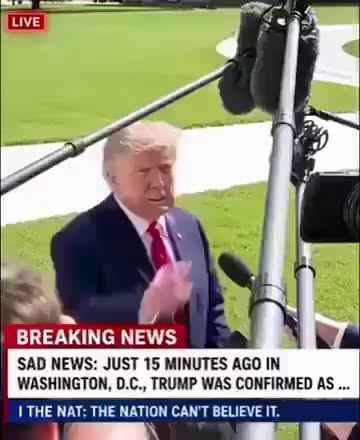
The Hook: In a hyper-partisan capital city defined by round-the-clock noise, relentless political combat, and the rapid-fire spin of the 24-hour media cycle, the most heavily analyzed political statement of the week was delivered in absolute, unvarnished silence. During a high-stakes address on Thursday afternoon, President Donald J. Trump brought a crowded Washington auditorium to a complete standstill. Departing from the booming rhetoric and high-octane delivery that typically define his public appearances, the President commanded the national stage with a prolonged, contemplative pause—a brief moment of stillness that instantly went viral, sparking fierce debate over the shifting dynamics of modern political communication and the art of executive presence.
A pause in a speech gives listeners a break from the pace the speaker has set. In a room, that interval is part of a continuous address. The audience has heard the point that preceded it and can hear how the speaker resumes. A short recording can preserve the silence while removing much of that surrounding information. The same moment can therefore feel quite different to an audience watching a few seconds on a phone.
That difference leaves room for competing readings. One person may treat the interval as an effort to give emphasis to a sentence. Another may see an awkward interruption. Both are interpretations of a brief scene, and the recording alone offers limited information about the speaker’s intent. The words before and after the pause can provide more context, especially when discussion moves from how the speech sounded to what it meant.
The reaction also reflects the habits of online coverage. A concise clip is easy to share. A viewer can point to the same visible moment without needing to agree with somebody else about its significance. Headlines and accompanying descriptions can guide that interpretation before the viewer presses play. Repeated clips can then turn one segment of a longer speech into the moment most closely associated with the event.
Silence is also an ordinary part of speaking. People stop to breathe, check their place, let a line settle, or respond to what is happening in the room. Those possibilities can be hard to distinguish in a short video. A longer recording offers a better sense of whether the interval fit the speaker’s usual rhythm and whether it interrupted a thought or fell between two completed points.
The immediate conversation around the address centered on the silence itself. It was a concrete detail that different viewers could discuss without having watched the entire event. The political meaning they assigned to it often reflected expectations they had brought to the speech. Some listeners paid close attention to tone and delivery, while others focused on the way the moment was presented by outlets and social accounts.
The fuller picture includes the speech, the brief segment that circulated, and the response it prompted. Each can be described separately. The address supplied the words and their setting. The clip highlighted one break in the delivery. The commentary that followed showed how quickly viewers could build very different accounts around the same few seconds.
That is what gave the pause a life beyond the room. Its reach was shaped as much by the way it was circulated as by the address in which it occurred.