Federal Charges Follow Shooting Near Vice Presidential Motorcade
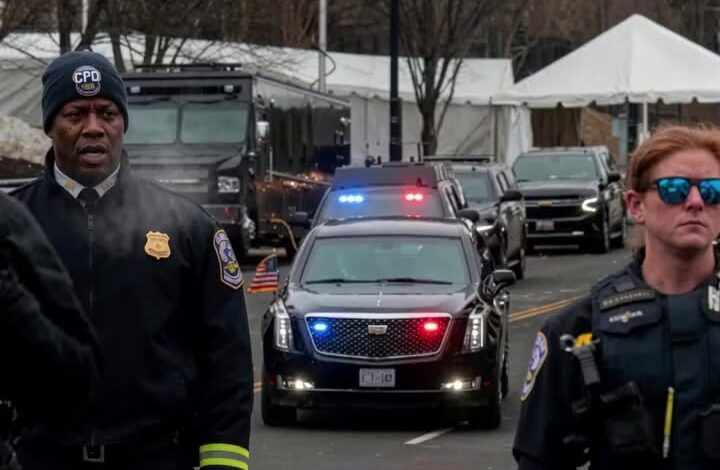
Federal prosecutors announced in May 2026 that a grand jury had indicted a Texas man in connection with a shooting near the Washington Monument. The Justice Department described an encounter between Secret Service personnel and Michael Marx on May 4. The announcement said that Vice President JD Vance’s motorcade was traveling through the area at about the same time. A civilian was wounded. The indictment is an accusation, and the account below describes what prosecutors alleged at that stage of the case.
According to the Justice Department, the encounter began in the afternoon when a plainclothes agent noticed a man who appeared to be concealing a gun near 15th Street and Madison Drive NW. The agent alerted the service’s operations center and requested assistance from uniformed personnel. The department placed the motorcade near 15th Street and Independence Avenue SW as it left the White House. Those locations help explain why the incident was described in relation to the motorcade.
Prosecutors said uniformed officers located Marx along its route. They alleged that he moved toward a group of people crossing the street, ran after officers gave commands, and drew a handgun during the pursuit. According to the complaint as summarized by the department, he turned and fired at a pursuing officer. A civilian behind the officer sustained a leg wound. Officers returned fire and subsequently provided aid to Marx, who was taken to a hospital. Investigators said they recovered a loaded handgun near where he fell.
The distinction between the location of the motorcade and the conduct charged is important. The department’s account places the vehicles in the area and describes the alleged firing at an officer. The indictment announcement identifies an assault charge involving federal officers and a firearm charge connected to a crime of violence. The proximity of the motorcade helps explain the attention paid to the case. The charging document sets out the specific allegations the prosecution would have to establish in court.
The public account also distinguishes two points in the case. A complaint was announced on May 6. On May 29, prosecutors announced the indictment and reported that Marx was expected to appear in federal court that day. An indictment records the charges brought by the grand jury. It leaves questions of proof and the outcome for the court process. The distinction matters in coverage of an incident where dramatic descriptions can travel much faster than the documents they are based on.
The reported location adds another piece of context. The encounter took place around public streets and crossings near the National Mall, where pedestrians were present as officers responded. The wounded civilian was part of that public setting. The sequence described by prosecutors concerns a police response on those streets, the alleged shooting, and the charges filed afterward. The vice presidential motorcade’s presence is one part of that sequence.
The May indictment announcement is a dated record of what the Justice Department had alleged and disclosed at that time. It allows readers to distinguish the reported injuries, the people described in the complaint, and the formal charges from broader claims that circulated about the encounter.